If you’re on a mission to eat your way through Paris one pastry at a time, you’re in luck. The city is home to more than a thousand bakeries, plus countless pâtisseries dedicated entirely to the art of dessert. While certain pastries, like macarons and éclairs, are known around the world, there’s a whole world of buttery, creamy, flaky goodness waiting to be discovered. My advice? Try as many as possible and consider it cultural research.
To help narrow down your options (slightly), here are some of the best French pastries to try in Paris, along with a few great places to find them.
*Some of the links in this article will earn a small commission if you click them and then purchase something. Thanks in advance for your support!
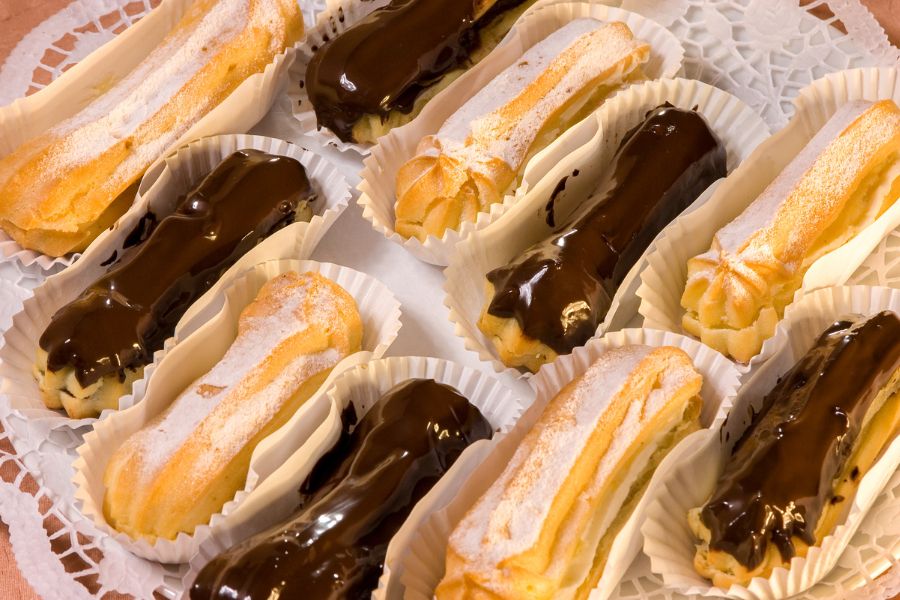
Eclair
If there’s one pastry you’ll spot in just about every bakery window in Paris, it’s the éclair. Its name means “lightning” in French, but no one knows exactly why. Some say it’s because you eat them in a flash, while others think it refers to the shiny glaze that catches the light.
This classic treat is made from airy choux pastry filled with cream and topped with a glossy icing. Traditional flavors are chocolate and coffee, but these days, pastry chefs have gotten a lot more adventurous. You can sometimes find pistachio, passion fruit, salted caramel, and other fun options.
To try the most creative versions, head to Eclair du Génie. Located in the Montorgueil neighborhood, its chef Christophe Adame has turned the humble éclair into an art form.
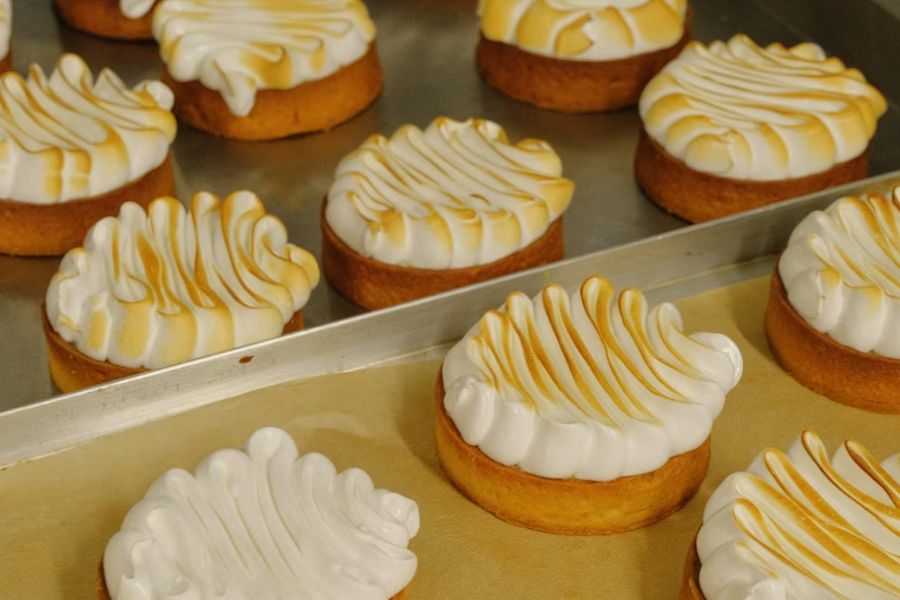
Tarte au Citron
Bright, tangy, and wonderfully refreshing, the tarte au citron is France’s answer to lemon pie, and it’s one of my personal favorites. While lemon desserts have been around for centuries, the French version became popular in the 19th and 20th centuries and is now a staple of bakery counters across the country.
It features a crisp pastry shell filled with silky lemon cream, which is sometimes crowned with a fluffy layer of meringue. I think the magic is in the balance between sweet and tart, but it somehow still seems light enough that you can convince yourself to order another pastry afterward.
One of the best versions can be found at Des Gâteaux et du Pain, a fantastic bakery known for its all-natural ingredients. One of its two locations is conveniently along the walking route of Day 2 of our Paris Itinerary and perfectly timed for a mid-afternoon snack.
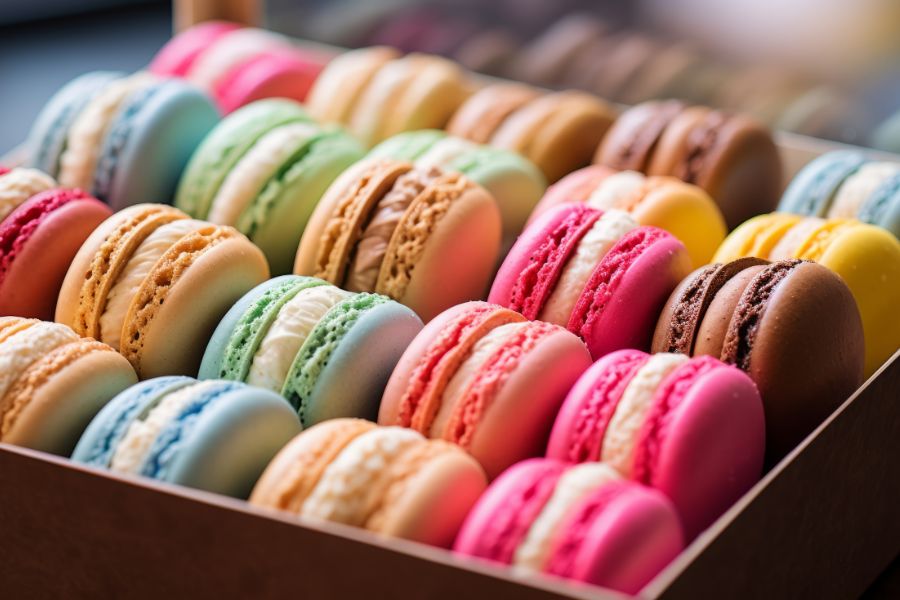
Macarons
These colorful little treats have become famous around the world, but Paris is still one of the best places to try them. Despite their very French reputation, macarons actually originated in Italy and were brought to France during the Renaissance, likely by the court of Queen Catherine de Medici.
The modern macaron, the one with two delicate almond-meringue shells sandwiching a creamy filling, didn’t arrive until the early 20th century. While Ladurée is probably the most famous name internationally, many Parisians would argue that Pierre Hermé is the true king of macarons.
With shops all over the city, he’s known for both intensely flavored classics and really surprising combinations. His signature Ispahan (rose, lychee, and raspberry) and Mogador (chocolate and passion fruit) are legendary, but I can never resist the salted caramel or a quirky seasonal flavor like the Garden of Eden (vanilla and basil).
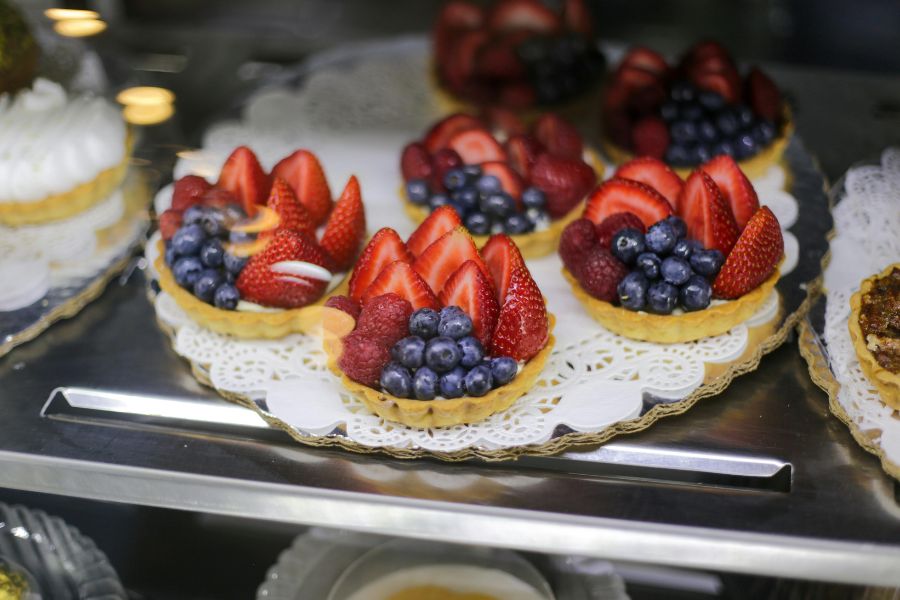
Tarte aux fruits
If you’re looking for a pastry that feels at least a little “healthy”, a fruit tart is the way to go. You’ll find them in bakeries all over Paris, usually topped with whatever fruit is in season.
Some are built on a buttery pastry shell filled with cream and fresh fruit, while others consist of a flaky pastry base topped with baked fruit. Either way, they’re a delicious excuse to tell yourself you’re eating fruit.
I have a particular weakness for apricot tarts, but honestly, I’ll take whatever is coming out of the ovens at Les Petits Mitrons. This tiny Montmartre bakery specializes in tarts and has absolutely mastered the crust. A light coating of sugar gives it the most satisfying crunch, making it very difficult to stop at just one slice.
Paris Brest
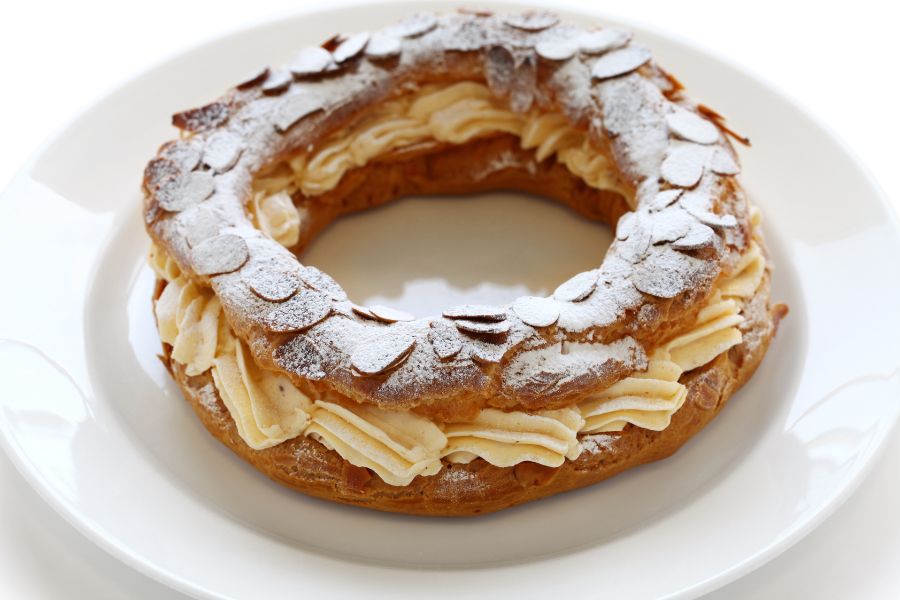
Leave it to the French to create a pastry inspired by a bicycle race. Created in 1910 by pastry chef Louis Durand, the Paris-Brest was inspired by the famous cycling race between Paris and the western city of Brest. Its circular shape is meant to resemble a bicycle wheel.
The pastry itself is a ring of choux pastry filled with rich praline cream and topped with crunchy almonds or hazelnuts. It’s nutty, creamy, slightly decadent, and dangerously easy to finish.
It remains one of my favorite French pastries and is absolutely worth seeking out. You’ll find excellent versions at bakeries around the city, including Pâtisserie Matthieu Pauline on Rue Cler. I’ve included a stop here on the Day 2 route of our Paris Itinerary so no need to spend a ton of time trying to work out how to fit it into your plan.
Réligieuse
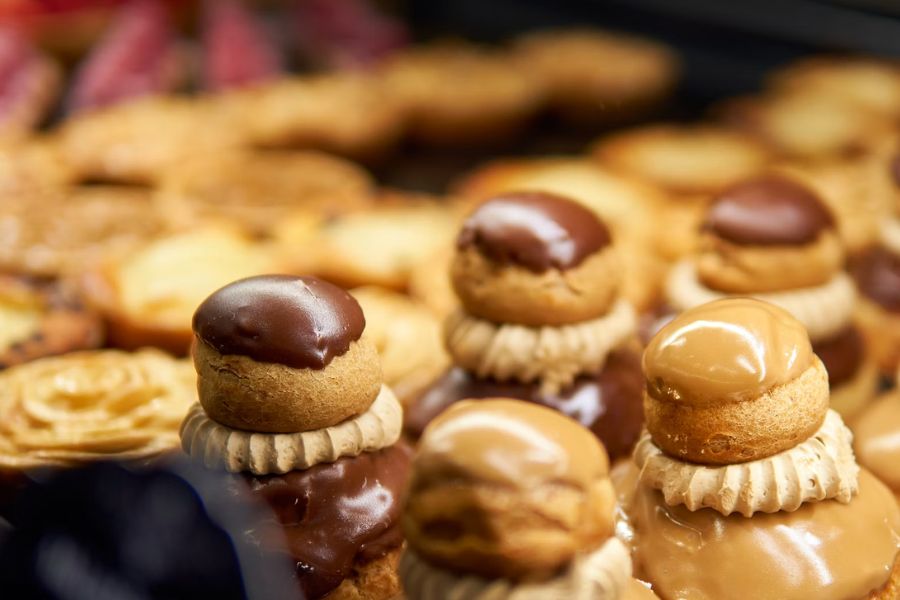
The religieuse has one of the more unusual names in the French pastry world. It means “nun” in French, and the pastry’s stacked shape, two cream-filled choux buns, one set on top of the other, is said to resemble a nun’s habit.
Traditionally glazed with chocolate or coffee icing and finished with decorative buttercream piping, it’s rich, elegant, and just a little over the top. Actually, it’s so indulgent that I don’t think the nuns would approve.
You’ll spot religieuses in bakeries across Paris, but for a particularly polished version, head to Dalloyau, one of the city’s historic pastry houses with locations in the 8th and 10th arrondissements.
Baba aux Rhum
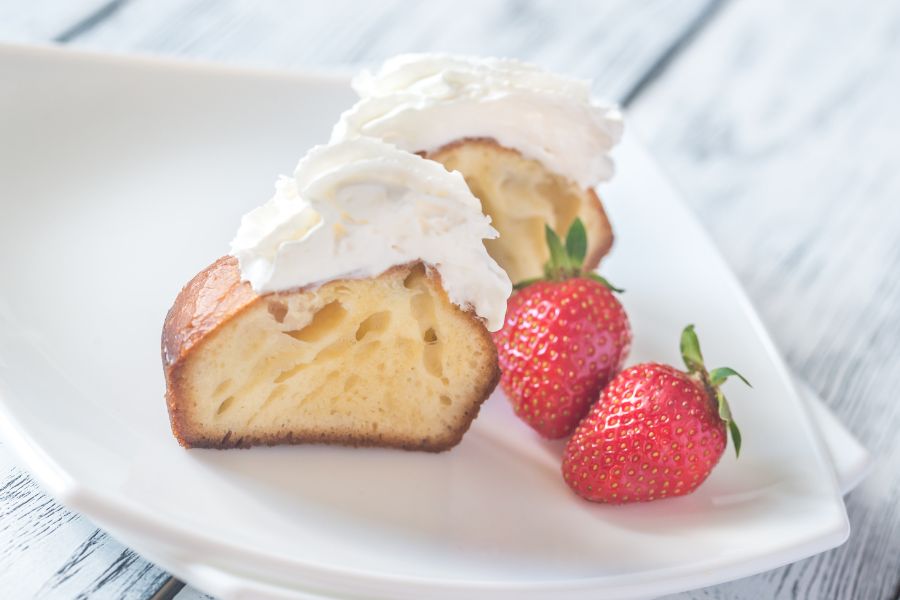
Here’s a French pastry that deserves far more attention than it gets. The baba au rhum is a soft, airy cake soaked in rum syrup and often served with whipped cream or pastry cream.
According to pastry lore, it was created for the former King of Poland and Duke of Lorraine, who complained that traditional cakes were too dry. His pastry chef, Nicolas Stohrer, responded by generously soaking one in alcohol, and a classic was born.
When the king’s daughter, Marie Leszczyńska, married Louis XV, Stohrer followed her to Paris and opened a pastry shop on Rue Montorgueil in 1730. Amazingly, it’s still there today. This amazing shop is a stop on the fabulous Chocolate and Pastries tour, which is a great opportunity to try some of the other items on this list as well.
Not only can you try the original boozy treat, but the shop itself is totally gorgeous and worth a visit even if you’re already full of pastries, which is unlikely.
Kouglof
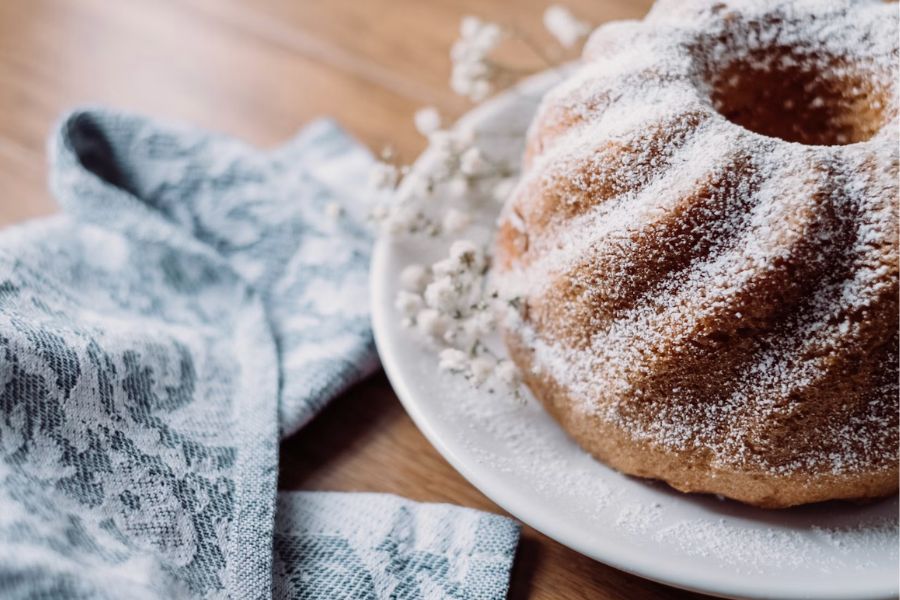
Part cake, part bread, and entirely delicious, kouglof (pronounced clue-gloff) is one of the signature treats from Alsace, a province in eastern France. Baked in a tall, fluted mold that gives it its distinctive shape, this lightly sweet yeasted cake is usually studded with raisins and almonds before being dusted with powdered sugar.
It’s traditionally enjoyed at breakfast or on special occasions, but I see no reason to limit it to either. Compared to some of France’s richer pastries, kouglof feels surprisingly light, making it a great excuse to shake up your usual croissant or pain-au-chocolat routine.
While not every bakery sells it, Yann Couvreur, who’s got a few locations around town, makes one of the best versions in Paris.
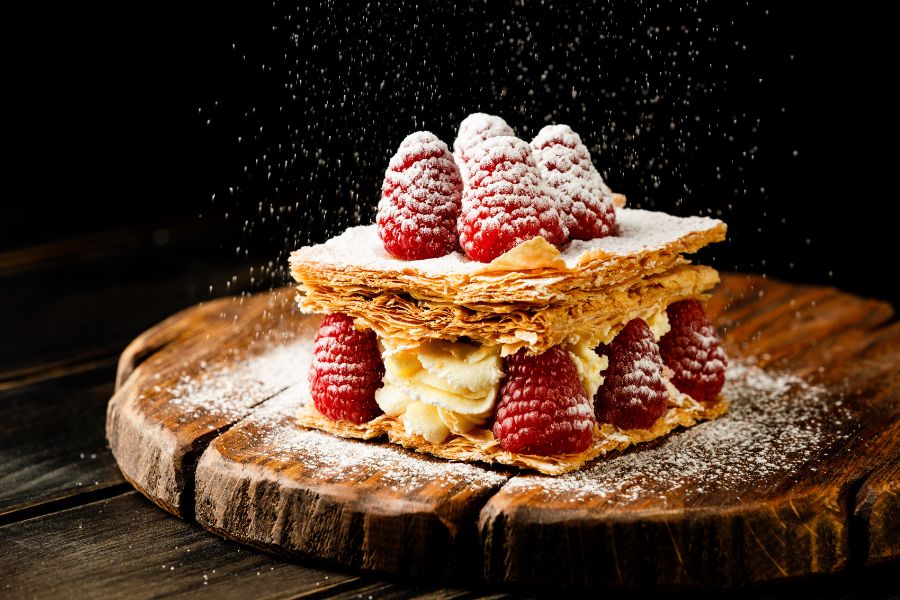
Millefeuille
Few pastries look quite as elegant as the millefeuille. Its name means “a thousand leaves,” a reference to the countless flaky layers of puff pastry that make up this French classic.
Dating back to at least the 17th century, it layers crisp pastry with pastry cream before being topped with a thin layer of icing. It may look simple, but don’t be fooled, a truly great millefeuille is notoriously difficult to make. The pastry has to stay shatteringly crisp while the filling remains smooth and luscious.
You’ll find millefeuille in bakeries all over Paris, but if you want to treat yourself, head to Carette. Pair a slice with a cup of tea or café crème, and you’ll be enjoying the sweet life in Paris for an hour or two.
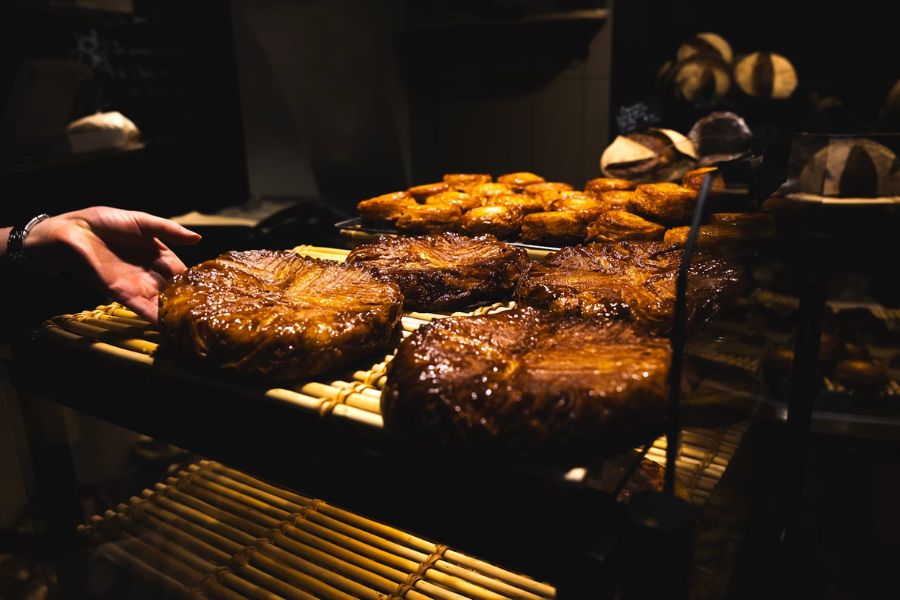
Kouign-amann
First things first – do not try to pronounce this treat correctly (it’s something like kwing-uh-man). Fortunately, you’ll be too busy eating it to care. This buttery masterpiece comes from Brittany, and its name literally translates to “butter cake” in the Breton language. That should tell you pretty much everything you need to know.
Legend has it that a baker in the seaside town of Douarnenez invented it in the 1860s by folding an alarming amount of butter and sugar into bread dough. During baking, the sugar caramelizes while the dough develops delicate flaky layers. The result is crispy, sticky, buttery perfection.
Some bakeries make traditional versions, but I suggest heading to Georges Larnicol. The award-winning chocolatier and pastry chef has created bite-sized versions called Kouignettes®, which come in a variety of flavors. My personal favorite is the apple caramel. Try one, and you’ll understand why stopping at just a single pastry in Paris is such a challenge.
After checking out my list of the best French pastries to try in Paris, are you looking for more great Paris tips? Read these articles next: